
Fastener Coating Comparisons
Fluoropolymer coatings have many advantages when compared to galvanized coatings and plating. Hot dipped galvanized coatings and cadmium or zinc plated bolts will freeze when subjected to the corrosive environments found in manufacturing plants, offshore oil rigs, etc. Most often removing the nuts requires a cutting torch. With FluoroKote#1®, these same nuts and bolts exhibit easy on and easy off characteristics increasing worker safety.
Cadmium and zinc plated fasteners provide similar corrosion resistance but do not compare to the lasting resistance of fluoropolymer coatings. These conventional plating processes have undergone the standard salt fog test (ASTM B117) and have been rated at 96 hours of corrosion resistance. With a FluoroKote#1® coated bolt that rating jumps to as much as 4,000 hours. The additional corrosion resistance allows fasteners to be disassembled quickly, saving lost downtime and man-hours.
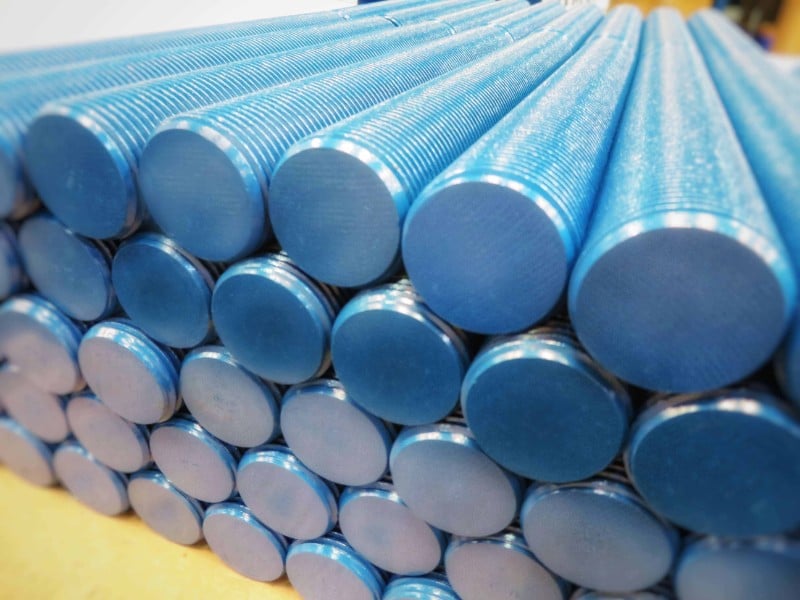
Fluoropolymer Coatings vs. Galvanized Coatings
Galvanizing produces a coating that is uneven, rough and thick. The rough surfaces make assembly difficult and a tight even tension on each bolt impossible. If used in sealing joints such as flanges, heads or inspection covers, the inconsistent tension forms an uneven fit resulting in a high probability of leaks. With a FluoroKote#1® coated bolt, tighter more consistent tensions are achieved with less required torque. The costs entailed with other bolt coatings, such as cadmium coating, can be staggering when factors such as man-hours, downtime, safety and equipment damage are considered. Bolts coated with FluoroKote#1® prove to be longer lasting, safer and more cost-effective than any other coated bolt.
| Fluoropolymer Coatings vs. Galvanized Coatings | |
|---|---|
| Fluoropolymer Coatings | Galvanized Coatings |
| Fluoropolymer coatings remain smooth & resistant when exposed to corrosive environments | Galvanized coatings freeze when subjected to corrosive environments |
| Fluorokote#1® bolts have up to 4,000 hours corrosion resistance in same salt fog test | Rated at 96 hours of corrosion resistance when undergoing a standard salt fog test (ASTM B117) |
|
Fluoropolymer coatings last much longer in corrosive environments, saving man-hours and reducing downtime |
Galvanized fasteners last a short amount of time in corrosive environments and are more difficult to disassemble |
| Smooth yet strong fluoropolymer coatings make assembly using bolts coated with Fluorokote#1® easy and quick | Galvanization results in an uneven and rough bolt surface, making assembly difficult |
| Bolts coated with Fluorokote#1® provide even tensioning that is tighter and acquired using less torque | Thickness caused by galvanized bolt coatings restricts tight, even tension to bolts |
More info about FluoroKote #1®
Frequently Asked Questions
What are the advantages of fluoropolymer coatings for fasteners?
We use our proprietary fluoropolymer coatings to deliver advantages including a low coefficient of friction, reduced torque requirements during assembly, and excellent resistance to corrosion and galling. These benefits enable fasteners to be assembled more easily and disassembled without cutting or torching, even after prolonged service.
How do we compare industrial fastener coatings in terms of corrosion resistance?
When comparing industrial fastener coatings, we evaluate how different coatings perform under salt spray (ASTM B117) and in real-world corrosive environments. For example, our fluoropolymer-coated bolts demonstrate ratings of up to 4,000 hours in the salt fog test, compared to ~96 hours for conventional cadmium- or zinc-plated fasteners. That clear difference in industrial fastener corrosion resistance is a key metric we emphasize.
Why might a customer choose our fluoropolymer-coated fasteners over galvanized or cadmium-plated ones?
There are several reasons. First, our fluoropolymer process delivers superior corrosion resistance and easier removal of fasteners. For example, galvanized coatings can produce uneven surfaces that make consistent tensioning difficult and risk leaks in flange assemblies. Second, the “easy-on, easy-off” quality of our fluoropolymer-coated fasteners reduces downtime and maintenance man-hours.
What environments or industries benefit most from our coating solutions?
We serve industries where industrial fastener corrosion resistance is critical: oil & gas, petrochemical, waterworks, chemical processing, military/defense, and general industry. In these settings, fasteners are subject to heavy corrosion, abrasion, chemical exposure, or freezing of nuts and bolts—our coatings are designed specifically to address these challenges.
Can you quantify the corrosion resistance of your fluoropolymer-coated fasteners?
Yes. Under the ASTM B117 salt spray test, our fluoropolymer-coated fasteners (using the FluoroKote 1 process) can withstand up to ~4,000 hours before a joint freezes or seizes. Conventional galvanized or zinc-plated fasteners in the same test are rated around 96 hours. These numbers illustrate the dramatic difference in industrial fastener coatings in terms of corrosion resistance.
How does the use of fluoropolymer coatings affect the assembly and maintenance of fastened connections?
Because we use fluoropolymer coatings that produce smoother, more complex, slick surfaces, the benefits include reduced friction during assembly, more consistent bolt tensioning, less torque needed, and fewer issues with galling or seizing. This improvement enhances both initial installation and future maintenance by making bolt removal straightforward, which supports improved industrial fastener corrosion resistance throughout the service life.
Are there any special considerations for applying fluoropolymer coatings to fasteners?
Yes. The performance of the coating depends on proper surface preparation, the application of a metallic base coat, an adhesion coat, and a fluoropolymer top coat. We require fasteners (for example, with a specified minimum hardness of Rockwell C32 or higher) to prevent hydrogen embrittlement. We tightly control coating thickness, cure, and adhesion. These process controls enable us to realize the full advantages of fluoropolymer coatings.
How do we support customers when comparing our coating to other fastener coating options?
We provide technical data, corrosion test results (including those exceeding 2,200 hours of salt spray performance), torque information, and guidance on selecting the most suitable coating for a specific service environment. By working with customers to assess their environment (including corrosive exposure, chemicals, temperature, fastener size, and joint type), we help them understand how our fluoropolymer-coated fasteners compare to other coatings in the context of industrial fastener coatings comparisons.
What maintenance or lifecycle cost benefits can be achieved by using our fluoropolymer-coated fasteners?
Because our coating offers superior industrial fastener corrosion resistance, the lifecycle benefits include fewer replacements, reduced downtime, easier disassembly (which saves labor and time), and fewer joint failures due to frozen or seized bolts. These advantages translate into lower total cost of ownership for fastened systems in demanding environments.



Metal Coatings Corp. maintains a huge stock of coated B7 studs, threaded bar and 2H nuts. Available for same-day shipping in a wide variety of sizes, each is expertly coated with the proprietary FluoroKote #1® fluoropolymer coating process that offers easier assembly, fights corrosion and prevents seizing and galling.
Request a Quote